The Stolen Hours: Where Your Most Surprising Work Actually Gets Made
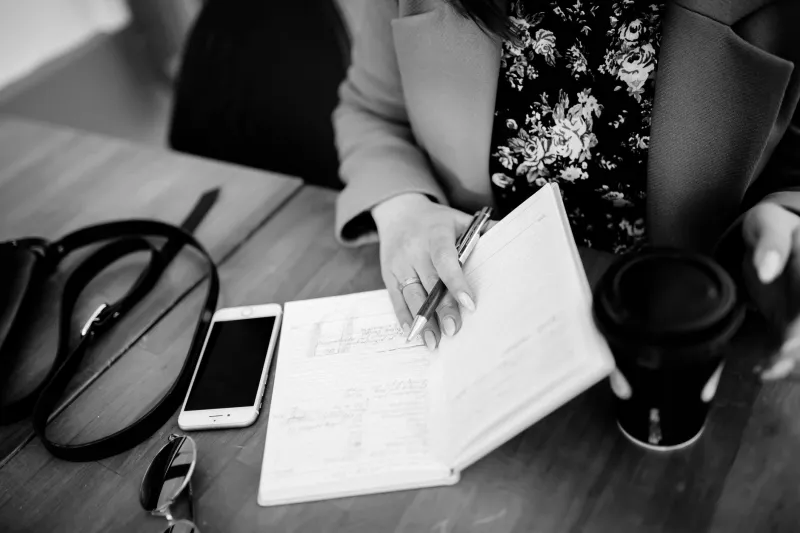
There's a fantasy a lot of artists carry around. It involves a long stretch of uninterrupted time, no obligations pressing in from the edges, maybe good light and a clean desk and a full cup of coffee that stays warm for the entire session. In this fantasy, the work flows. Everything clicks.
And then real life exists.
Real life is a 25-minute window before your next thing. It's a delayed flight and a notebook you happened to throw in your bag. It's a broken rehearsal schedule that accidentally gives you an afternoon you didn't budget for. It's margins — the spaces between the things that were supposed to matter.
Here's what I've come to believe after years of making work in both ideal conditions and completely chaotic ones: some of the most alive, most surprising, most genuinely interesting creative output happens in exactly those unplanned pockets. Not despite the constraint. Because of it.
Why Limitations Unlock Something That Freedom Can't
There's actual research behind this, though you don't need a study to feel it if you've experienced it. When time is tight and conditions aren't ideal, your brain stops performing its usual editorial function. It doesn't have the bandwidth to second-guess every choice or compare what you're making to some imagined perfect version. It just makes.
And sometimes what comes out in that unguarded state is more honest than anything you'd have produced with a cleared schedule and a week of mental preparation.
Constraint forces specificity. When you only have 20 minutes, you can't afford to explore every option. You make a choice, you commit, you move. That decisiveness — which can feel like limitation — often produces work with a kind of clarity that deliberate, unhurried creation struggles to match.
Musicians talk about this constantly. Some of the most iconic songs in American music history were written in under an hour, often under some kind of external pressure. Not because pressure is magic, but because pressure removes the option of overthinking.
The Margin as Method
I want to push back against the idea that treating stolen time as a legitimate creative space is just a coping mechanism for people who can't get their schedules together. It's actually a practice — one worth developing intentionally.
The difference between an artist who uses marginal time well and one who wastes it usually comes down to one thing: readiness. Not readiness in the sense of having everything set up perfectly, but readiness in the sense of having a low barrier to entry for your own creative process.
What does that look like in practice?
It means keeping something close — a notes app, a voice memo habit, a sketchbook that actually travels with you rather than sitting on a shelf looking important. It means having a few creative prompts or constraints you can deploy immediately when an unexpected window opens up. It means training yourself to not require a warm-up period every single time.
Some artists I know keep a running list of micro-projects — small creative experiments that don't require a full session to be meaningful. A single verse. A color study. A one-paragraph character sketch. These aren't lesser work. They're a different scale of work, and they often feed directly into the larger pieces in ways that are hard to predict.
When the Interruption Is the Idea
There's another layer to this worth talking about, which is that unplanned creative time often arrives with unplanned creative input. You're not in your usual environment, not following your usual routine, not surrounded by the same stimuli. And that friction — that slight foreignness — can be generative in a way that comfort zones aren't.
I've had ideas land during delayed flights that I never would have reached in my studio because the studio is too familiar. My brain knows that space. It knows what it's supposed to do there. A gate at O'Hare with three hours to kill? My brain has no script for that. So it wanders. And sometimes the wander takes it somewhere worth going.
This is why a lot of working artists are suspicious of too much stability. Not in a self-destructive, chaos-chasing way — but in the sense that they know comfort can calcify. The interrupted schedule, the detour, the thing that goes sideways — these aren't just inconveniences. They're invitations.
Making Peace With Imperfect Conditions
I think the deeper cultural shift that needs to happen — especially for artists in the US who've absorbed a lot of messaging about productivity and optimization — is moving away from the idea that creative work requires ideal conditions to be valid.
We've been sold a version of the artistic process that looks like a lot of intentional, well-resourced dedication. Long residencies. Private studios. Dedicated time blocks. And those things are genuinely valuable when you can access them. But they're not the only container in which real work gets made.
Some of the most honest creative work in this country's cultural history was made by people who didn't have the luxury of ideal conditions. Who made it in kitchens, on lunch breaks, in notebooks balanced on their knees on the subway. The constraint wasn't a bug in their process. It was built into the foundation of everything they made.
Your margin time is not a lesser category of creative time. It's just a different one. And if you start treating it like it matters — if you show up for the 20 minutes with the same intention you'd bring to the full afternoon — you might be surprised what it gives you back.
The stolen hours have a way of being generous when you let them.