No Perfect Conditions: How to Make Great Work When Everything Around You Is Falling Apart
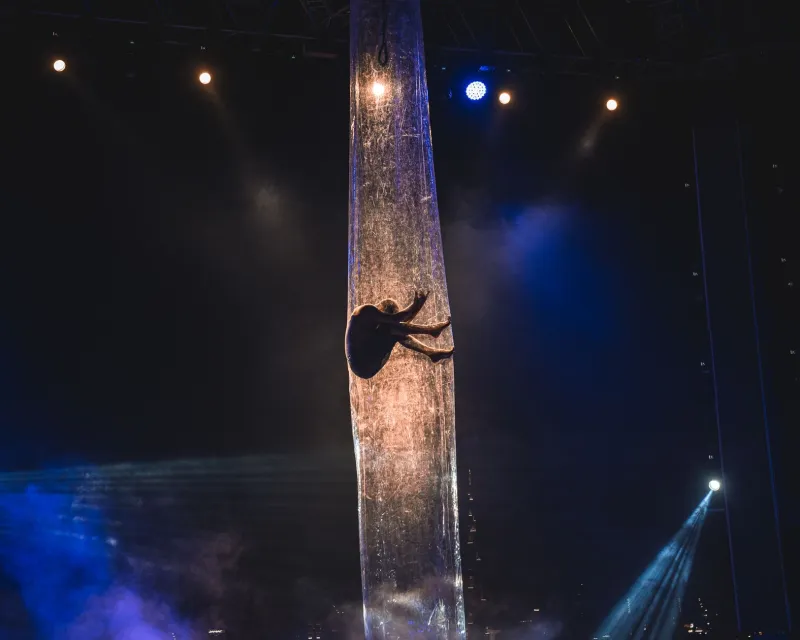
I've performed in a bar where the sound system kept cutting out mid-song. I've shown up to a gallery opening where the lighting was so wrong it made everything look flat and sad. I've stood in front of an audience that clearly did not want to be there — they were there for someone else, and I was the inconvenient warm-up act.
Every single one of those nights, I had a choice: let the conditions define the work, or figure out how to do the work anyway.
The thing nobody tells you early in your creative life is that the environment is almost never going to cooperate. There will always be rain — literal rain, metaphorical rain, the kind that soaks through your plans and leaves you standing in a puddle wondering if tonight was even worth it. What separates artists who build lasting careers from those who flame out isn't talent. It's the ability to create something real regardless of what's happening around them.
Here's how I've learned to do that.
Stop Waiting for the Room to Give You Permission
The biggest mental shift I ever made was realizing that the room doesn't owe you anything. Not the right temperature, not an engaged crowd, not working equipment. The room is just a room. It's neutral. It doesn't care about your vision.
When you walk in expecting the environment to meet you halfway, you're handing over a portion of your creative authority before you've even started. The moment you catch yourself thinking if only the sound were better or if this crowd were more into it, you've already started negotiating against yourself.
Instead, try flipping the script: walk in assuming nothing will work perfectly, and plan your performance or creative session around that assumption. What's the version of this that still lands even if the mic is bad? What's the core of this piece that survives even if the technical elements fail? When you've already answered those questions before you need them, you're not scrambling — you're adapting.
Build a Pre-Work Ritual That's Completely Internal
External rituals are fragile. If your pre-show routine depends on a specific green room, a certain kind of quiet, or a particular warm-up space, you're setting yourself up to be thrown off constantly. Instead, develop rituals that live entirely inside you.
For me, that looks like a very specific breathing pattern I do for about three minutes before I go on — doesn't matter if I'm doing it in a janky backstage hallway or a gorgeous dressing room. I have a mental phrase I repeat that has nothing to do with the show itself and everything to do with why I make work at all. I run through a short visualization that isn't about the performance going perfectly — it's about me being fully present regardless of what happens.
These internal anchors are portable. Nobody can take them from you. Bad weather can't cancel them. A terrible venue can't disrupt them. They exist in the one environment you actually control.
Learn the Difference Between Adapting and Compromising
This one took me years to figure out, and I still have to remind myself of it regularly.
Adapting means changing your approach to protect your intention. Compromising means changing your intention because the approach got hard.
If the sound is bad, adapting might mean leaning into more dynamic, expressive movement so the physical storytelling carries more weight. Compromising would be cutting the most emotionally demanding piece from the set because you're worried it won't land the same way.
The first keeps your creative vision intact. The second erodes it in ways you might not even notice until you look back and realize you've been making smaller and smaller versions of what you actually meant to make.
When conditions go sideways, ask yourself: am I changing how I'm doing this, or am I changing what this is? One is resilience. The other is retreat.
Difficult Audiences Are Data, Not Verdicts
A hostile or disengaged room is genuinely one of the hardest things to perform into. There's a particular kind of silence from an audience that doesn't want you there that can feel almost physically cold. I've felt it. It's awful.
But here's what I've come to understand: a difficult audience is information, not a judgment on the worth of your work. They might be tired. They might have expected something completely different. They might be going through something that has nothing to do with you. Their energy in the room right now is not a referendum on your artistic value.
When I feel that wall go up, I've learned to get curious instead of defensive. What would it take to genuinely connect with even one person in this room right now? Not to win them over — that's ego talking — but to find the real, human thread between what I'm making and what they might actually need tonight.
Sometimes you find it. Sometimes you don't. But staying curious keeps you creative. Getting defensive just makes you smaller.
The Technical Failure Survival Kit
Practical stuff matters too, so let's be real about it. Technical failures — dead mics, broken projectors, sound systems that cut out at the worst possible moment — are going to happen. Having a mental playbook ready means you don't have to improvise your response to the failure at the same time you're trying to manage it emotionally.
A few things that have helped me: Always know what the stripped-down version of your work looks like. If everything electronic failed right now, could you still do something meaningful? If the answer is no, that's worth thinking about. Also, communicate with your audience when things go wrong — not apologetically, but matter-of-factly. People are incredibly forgiving when you acknowledge reality instead of pretending it isn't happening. Pretending is the thing that makes everyone uncomfortable.
And finally: have one move ready that you genuinely love doing that requires nothing but you. A story, an a cappella moment, a piece you can deliver without any support. It won't always be the right call, but knowing it's there changes how you hold yourself when the tech starts dying around you.
The Work Is the Constant
Here's the thing about rain: it doesn't stop being rain just because you're tired of getting wet. The conditions aren't going to stabilize just because you've been doing this long enough. There will always be a new version of the difficult room, the broken equipment, the wrong weather.
What changes is you. The longer you do this, the more clearly you understand that the work is the one constant you can actually depend on. Not the conditions around it — those will always shift. The work itself, and your commitment to it, is the thing that holds.
That's not a romantic idea. It's a practical one. Build your creative practice around the assumption that the environment will be imperfect, and you'll never be caught unprepared. Work with what you have. Protect your intention. Stay curious when things go sideways.
The rain is going to come. Make something anyway.