I Stopped Playing the Promotion Game and More People Actually Showed Up
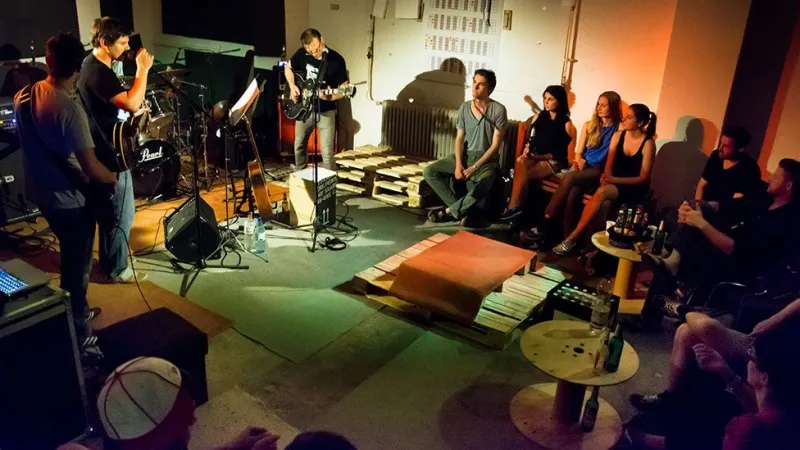
Photo: performer intimate small venue audience connection live show, via ychef.files.bbci.co.uk
I remember the exact moment I decided to quit.
I was sitting in my car in a parking garage in downtown Chicago, editing a reel I didn't care about, for a platform I was exhausted by, to promote a show I was genuinely excited about — and somehow the promotion was killing the excitement. I posted it, got decent views, and sold maybe four tickets to people who already knew me anyway.
All that energy. Four tickets.
I sat there for a while with the engine off, and I made a decision: I was done doing what everyone told me I was supposed to do. I had no idea what I was going to do instead. But I knew the current thing wasn't it.
The Playbook That Wasn't Working
If you've spent any time in the independent performance world, you know the standard advice by heart. Post three to five times a week. Use trending audio. Engage in the comments. Repurpose your content. Build your email list. Go live. Collaborate for reach. Optimize your bio. The list is endless and it changes every six months when the algorithm does.
I followed it. I really did. For almost two full years, I treated my art like a content business. I had a posting schedule. I tracked analytics. I A/B tested my captions like I was running a software startup.
And here's what I got: modest follower growth, decent impressions, and rooms that were still half-empty on a good night.
The numbers looked okay on a dashboard. They looked a lot less okay when I was standing at a venue at 7:45 PM watching people trickle in.
The Shift: Going Hyper-Local and Hyper-Human
The first thing I did when I stepped off the content treadmill was something that felt almost embarrassingly low-tech: I started showing up places.
Not performing. Just showing up. Open mics I wasn't headlining. Art walks in my neighborhood. A poetry series at a bookstore on the north side that maybe forty people attended on a packed night. I wasn't there to network in any transactional sense. I was there because I was genuinely curious about what other people were making.
And something weird happened. People started to know me. Not as a brand, not as a profile — as an actual person who cared about the same things they cared about. When I mentioned I had a show coming up, it didn't feel like a pitch. It felt like an invitation between people who already had a relationship.
The first show I promoted almost entirely through real-world presence and personal conversations? Sold out a 120-cap room. I had posted about it exactly twice on Instagram.
Guerrilla Tactics That Actually Move Tickets
Once I saw that human-scale connection was doing what algorithmic reach couldn't, I got creative about how to scale that feeling without losing it.
Handwritten postcards. I know. I know. But hear me out. I sent about sixty handwritten notes to people I'd genuinely connected with over the previous year — not a mass mailing, actual personal notes referencing specific conversations. The response rate was unlike anything I'd seen from any digital campaign. People kept them. A few told me they'd put them on their fridge.
Micro-events before the main event. Instead of doing a big promotional push for a major show, I started hosting tiny, low-pressure hangouts in the weeks leading up to it. A living room listening session. A free thirty-minute set at a coffee shop. These weren't promotional in any obvious way — they were just chances for people to experience the work in an intimate setting. By the time the actual show rolled around, there was already a community around it.
Partnering with non-arts businesses. One of my most effective audience-building moves was connecting with a local independent bookstore and a neighborhood bar that hosted trivia nights. Neither had anything to do with performance, but both had deeply loyal, community-minded regulars. A small cross-promotion with each of them brought in people who never would have found me through music-adjacent social media.
What Other Artists Told Me
I started asking around. Turns out I wasn't the only one who'd stumbled onto this.
A Chicago-based visual and performance artist I deeply respect told me she'd built most of her audience through what she called "radical presence" — being genuinely involved in her neighborhood, attending city council meetings, volunteering at local arts organizations. "People buy tickets from people they trust," she told me. "And trust is built in person."
A touring folk musician I met at a festival in Nashville said the most valuable thing he ever did for his career was spend a year doing house concerts — tiny, intimate shows in people's living rooms across the Midwest. His email list from that period still converts better than anything else he does. "Those people didn't just come to a show," he said. "They hosted one. They have skin in the game."
The pattern was consistent: sustainable audiences are built through depth, not width.
The Part That's Hard to Hear
None of this is fast. That's the trade-off, and I won't pretend otherwise.
The algorithm can get you in front of ten thousand people overnight. What it can't do is make any of them care. Real community-building is slow and unglamorous. It requires you to be interested in people before you're interesting to them. It requires patience in an industry that worships momentum.
But here's what I've found on the other side of that patience: audiences who come back. People who bring their friends. Rooms that feel alive because everyone in them actually wants to be there, not because they stumbled in from a sponsored post.
I still use social media. I'm not anti-platform. But I use it differently now — to document real things that are already happening, not to manufacture the appearance of a life worth following.
The show I'm most proud of this year? Word of mouth got me there. A conversation at a coffee shop, a shared flyer at a record store, a text from someone who told a friend who told a friend.
Old-fashioned. Totally inefficient. Absolutely worth it.