The Right to Ruin It First: Why Your Worst Work Might Be Your Most Important
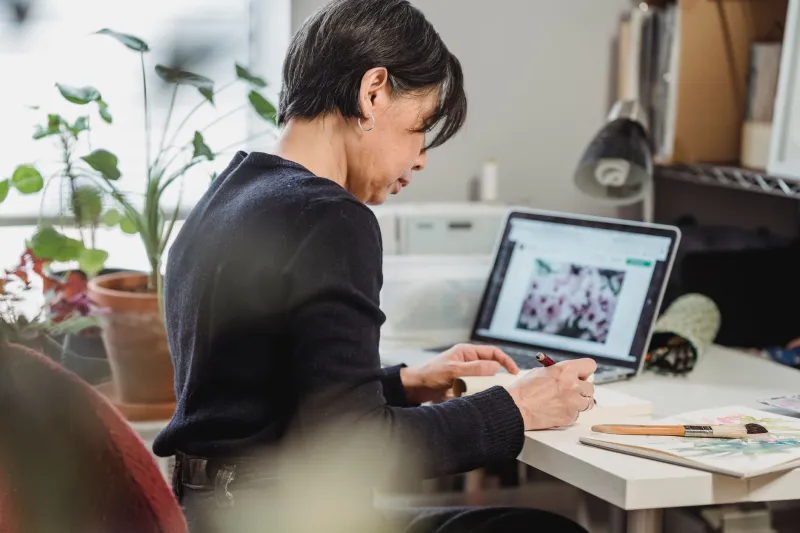
I have a folder on my laptop called "Do Not Open." It's not password protected. Nobody's stopping anyone from clicking into it. But the name is a promise I made to myself a few years ago, when I realized that the most important work I do never starts out looking like anything worth seeing.
Inside that folder are voice memos where I sound genuinely unwell. There are half-finished lyrics that would embarrass me in front of anyone I respect. There's a video of a performance concept I tried in my living room that — and I cannot stress this enough — should never see the light of day. And I mean that as a compliment to myself.
Because those files represent something that's getting harder and harder to protect: the private laboratory. The place where you're allowed to be bad.
The Internet Doesn't Do "In Progress"
Social media has done a lot for artists. Visibility, community, direct access to fans — I'm not going to pretend none of that matters. But somewhere along the way, the platforms trained us to believe that the creative process should be public-facing from the very first breath of an idea.
Behind-the-scenes content. "Day in the life" videos. Raw and unfiltered takes. All of it sounds like honesty, but a lot of it is actually a curated version of honesty — the kind that's still presentable enough to post. Real messiness, real failure, real "I genuinely don't know what I'm doing here" energy doesn't make it to the grid. And the pressure to document everything means artists are increasingly skipping the phase where they're allowed to not know.
That phase has a name in theater: the rehearsal room. In music, it's the demo stage. In visual art, it's the sketchbook. Every discipline has its own version of the private laboratory, and every discipline is slowly losing it to the content machine.
What Bombing in Private Actually Does for You
Here's what I've noticed in my own work: the experiments that flopped hardest in private were almost always the ones that taught me the most. Not in a tidy, inspirational way. In a genuinely uncomfortable, "oh, that's what I actually sound like when I'm reaching too far" kind of way.
Failing in private gives you information without consequences. You can try something that contradicts everything you've built publicly. You can abandon it halfway through without owing anyone an explanation. You can discover that your instinct was completely wrong and quietly adjust course before anyone's watching.
When the failure happens in public — which is increasingly the default for artists who share their process in real time — the stakes change. You're no longer just processing information about your work. You're managing an audience's reaction to it. And that management instinct kicks in fast, often before you've had time to actually learn anything.
I've watched talented people pivot away from genuinely interesting experiments the moment they posted early footage and the comments were lukewarm. Not because the experiment was actually failing — but because the audience response made it feel like it was. Those are two completely different things, and conflating them costs you.
The Sketch Is Not the Painting
There's a reason artists have historically kept sketchbooks private. It's not embarrassment. It's protection — of the idea, of the process, of the fragile early version of something that hasn't figured out what it is yet.
A sketch isn't a smaller painting. It's a different object entirely. It exists to let you work out problems without the pressure of a finished surface. The moment you treat it like a finished painting — or worse, share it as though it were one — you've collapsed two stages of making into one, and something gets lost in that compression.
I think about this a lot when I'm developing new material. There's a version of a song or a set piece that only exists for me. It's the version where I'm still asking questions instead of answering them. That version needs to stay mine for a while, or it hardens too quickly into something that performs confidence it hasn't earned yet.
Protecting Your Own Process
I'm not saying go dark. I'm not saying never share anything until it's perfect. Finished and perfect aren't the same thing, and waiting for perfection is its own kind of trap.
What I'm saying is that you're allowed to have a stage of your work that doesn't belong to the internet. That's not being precious. That's being strategic about where your creative energy goes.
A few things that have helped me maintain that space:
Give yourself a time lock. New ideas don't go anywhere public for at least two weeks. That's enough time to know whether something is actually interesting or just exciting because it's new.
Find one person who gets a front-row seat to the mess. Not a public audience — one trusted collaborator or friend who can witness the rough work without you performing for them. That's a different kind of accountability.
Stop calling everything content. Not every moment of your process has to be documented. Some things can just happen, be useful, and disappear. That's allowed.
The Work That Lives in the Dark
Rain doesn't announce itself before it falls. It builds quietly, gathers somewhere unseen, and then — when the conditions are right — it arrives. That's not a metaphor I'm forcing. It's just how things that matter actually work.
The best performances I've ever given were built on a foundation of terrible rehearsals nobody saw. The material I'm most proud of went through versions I'd never play for anyone. The laboratory phase wasn't just useful — it was the whole point.
You don't owe the internet your experiments. You owe yourself the chance to run them.