Why Stepping Away from Your Art Might Be the Most Productive Thing You Do This Year
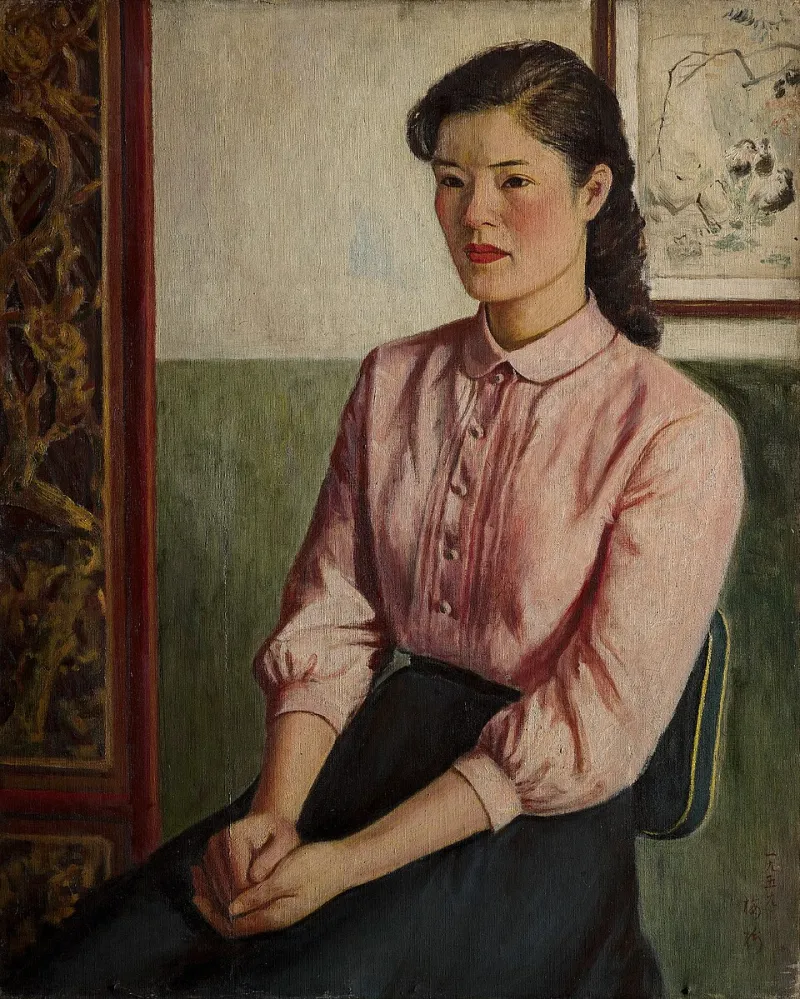
Photo: Li Mei-shu, CC BY-SA 4.0, via Wikimedia Commons
I used to wear exhaustion like a badge.
Not consciously. I wasn't out here bragging about my four-hours-of-sleep lifestyle or posting gym selfies at 5 a.m. But somewhere in the background of my creative life, I had absorbed this idea that stopping — even briefly — was a kind of failure. That the artists who mattered were the ones who never let up. Who were always making, always touring, always releasing, always on.
And then I hit a point where I was technically doing everything right and producing some of the most hollow work of my career. I was showing up. I was shipping. I was completely empty.
That's when I started actually thinking about rest — not as a reward for hard work, but as a condition for it.
The Hustle Myth Has a Specific Victim
Hustle culture isn't equally brutal to everyone. It hits creative people in a particular way because our output is so tied to our inner life. A factory worker running on fumes might produce a slower widget. An artist running on fumes produces work that feels like a slower widget — technically present, dimensionally flat.
The problem is that the metrics we use to measure creative productivity are almost all external. Posts published. Shows booked. Tracks released. Followers gained. None of those numbers tell you anything about whether the well is full or bone dry. They just tell you whether water came out.
You can run a well dry and still get water for a while. That's the insidious part. The depletion isn't always visible until you're already in trouble.
What a Fallow Season Actually Looks Like
I took what I started calling a "creative pause" — not a vacation, not a breakdown, just a deliberate period where I stopped producing and started absorbing. No deadlines. No content calendar. No pressure to turn experience into output.
It felt deeply uncomfortable for the first couple of weeks. My brain kept generating content ideas the way a phantom limb keeps sending signals. I'd be in the middle of something genuinely enjoyable and catch myself mentally drafting a caption for it.
Gradually, that quieted down. And what replaced it was something I hadn't felt in a long time: actual curiosity. I started going to shows just to go to shows. Reading books that had nothing to do with my craft. Wandering around cities without an agenda. Sitting with music I loved and letting it just be music, not research.
I wasn't working. I was filling up.
When I came back to creating, the difference was immediate and a little embarrassing — embarrassing because it was so obvious in retrospect. The ideas had more texture. The instincts were sharper. I made decisions faster because I wasn't second-guessing from a place of depletion. I had opinions again.
The Science Backs This Up, But Artists Already Know It
Sleep researchers have documented for years that the brain consolidates learning, processes emotion, and generates novel connections during rest — particularly during sleep, but also during periods of low-demand wakefulness. The "aha" moments in the shower aren't a cliché. They're neuroscience.
Creative rest works the same way. When you step back from active production, your brain doesn't go offline. It integrates. It finds patterns in what you've been doing. It surfaces connections you were too busy to notice.
Most working artists know this intuitively, even if they can't always honor it. A choreographer I talked to described her between-project periods as "composting" — the old stuff breaks down and becomes the soil for the next thing. A songwriter I know calls it "going fallow," borrowing the agricultural term for land left unplanted to restore its nutrients.
The language matters. When you frame rest as part of the creative cycle rather than an interruption of it, you stop treating it like a guilty pleasure and start treating it like a professional practice.
The Pressure to Perform Rest Correctly
Here's a trap I want to call out, because I fell into it: the moment rest became something I was doing for my art, it stopped being rest.
There's a version of the creative sabbatical that gets immediately colonized by productivity logic. You're not resting — you're investing in your future output. You're not reading for pleasure — you're doing research. You're not taking a walk — you're incubating your next project. This is hustle culture in a bathrobe.
Real rest has to include space for things that don't feed the work. For experiences that are just for you. For boredom, even. Boredom is deeply underrated as a creative resource — it's the state your brain enters when it runs out of external stimulation and has to generate its own, which is kind of the entire premise of imagination.
You don't have to justify your rest to your career. Your career will benefit anyway. But that can't be the point.
Practical Ways to Actually Stop
If you're reading this and nodding along but already composing your excuse for why you specifically can't take a real break, I see you. Here's what's helped me and others I've talked to:
Set a defined window. Indefinite breaks are psychologically harder to take than bounded ones. "I'm taking two weeks where I don't produce anything" is easier to commit to than "I'm going to rest until I feel better." Give it a container.
Separate consumption from production. During your rest period, you can still watch, listen, attend, read. Just don't turn it into content. Let it be input without forcing output.
Tell someone. Accountability works in both directions. Just as you'd tell a collaborator you're on deadline, tell someone you trust that you're stepping back. It makes it real and reduces the guilt spiral.
Notice what you miss. Genuine rest often clarifies what you actually love about your craft versus what you've been doing out of habit or obligation. What pulls you back? That's information worth having.
The Work Waits
Here's what I know now that I didn't know when I was grinding through empty: the work will be there. The audience will be there. The opportunities — the real ones, the ones worth having — don't evaporate because you took a month to breathe.
What does evaporate, if you never let yourself rest, is the thing that made the work worth making in the first place. The perspective. The feeling. The reason you started.
Rest isn't a rain check on your creative life. It's part of what keeps it alive.